
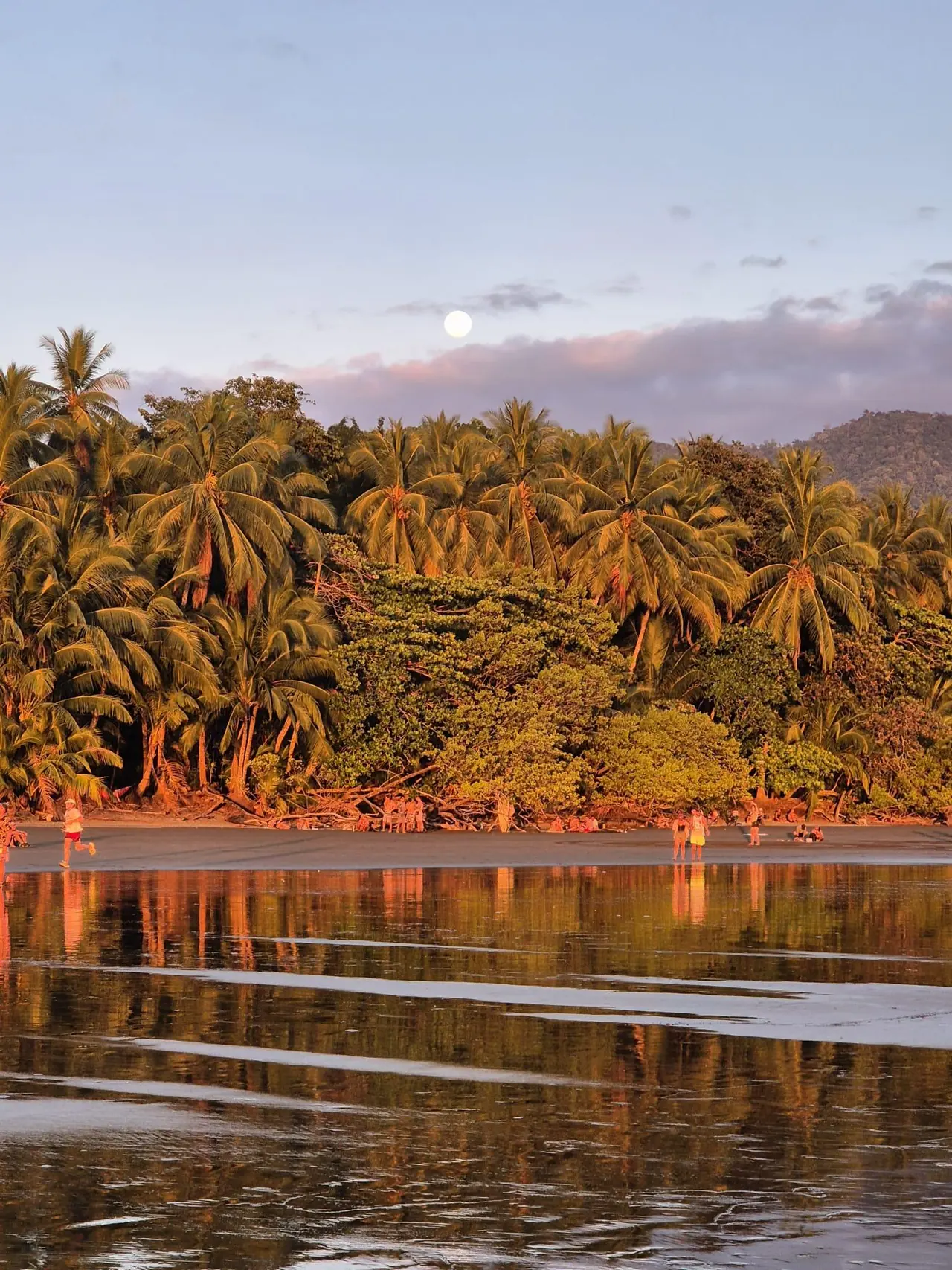
The short answer
Every season in Costa Rica has a magic of its own; the only question is which one fits you. December–April is near-constant sunshine, perfect for beaches and families, but pricier and busier. May–November is green, quiet and cheaper, with a short afternoon shower. And the little secret: when it's raining on the Pacific, the Caribbean side is shining.
This is one of the first questions we get on WhatsApp, and it makes sense. You're flying a long way, you want to get it right. We've lived in Costa Rica for five years and seen every month up close, so instead of quoting you weather tables, we'll tell you how it actually feels here through the year.
Two seasons, not four
Costa Rica doesn't have winter and summer the way you know them. There are just two seasons, and they split the year in half:
Dry season (December–April)
This is the "classic" season: blue skies, long days, and almost no rain on the Pacific side. It's the best time for beaches, family trips with kids, and anyone who wants full days planned without thinking about the weather. The downside? Everyone knows it, so prices peak, the good hotels fill up months ahead, and the popular spots get crowded. If you're aiming for the holidays (Christmas, Easter), book very early.
Green season (May–November)
Don't let the name "rainy season" scare you. Most of the time it's a beautiful sunny day with one strong, short shower in the afternoon, and we simply build the day around it (activities in the morning, rest or a spa during the rain). In return you get a green, blooming country, waterfalls at full force, fewer tourists, and far gentler prices. For independent travelers and anyone after quiet, this is in our opinion the most beautiful season. Just note: September and October are the rainiest months on the Pacific side. By contrast, July and August usually enjoy a drier window in the middle of the green season (what locals call the "little summer"), one of the best-value and most beautiful times to travel, still green and full of life.
The secret no brochure tells you: the Caribbean season is reversed
Here's the most useful insight in this guide: Costa Rica's Caribbean coast (Puerto Viejo, Cahuita, Tortuguero) runs on the opposite season calendar from the Pacific. Meaning exactly when the Pacific side gets the most rain, in September and October, the Caribbean enjoys its driest, sunniest window. And it works the other way around too. So even if you land in the middle of the Pacific "rainy season," we simply shift the route east to the Caribbean, and you get sun right when everyone else is wet. Only someone who lives here knows that trick; not someone reading a map from afar.
Coming for the wildlife? Time it right
If your dream is "wow" moments with animals, timing matters:
- Humpback whales in Marino Ballena Bay (Uvita): the big season runs roughly August–October, right in the heart of the green season.
- Sea turtles: green-turtle nesting in Tortuguero runs roughly July–October; and at Ostional beach, hundreds of turtles sometimes arrive together during the green season.
- Quetzal (the most sought-after cloud-forest bird): easiest to spot in nesting season, roughly February–May, in the high mountains like San Gerardo and Monteverde.
Notice how many of these peaks fall right in the green season, one more reason not to rule it out.
And how long does it take to get there?
From North America there are plenty of direct flights to San José (SJO) and Liberia (LIR), from hubs like Miami, Houston, Atlanta, Newark and Toronto. From Europe you'll usually connect once (via Madrid, London, Frankfurt or a US hub). Either way, plan for a real travel day getting in and out. That's part of why we recommend at least two weeks (15–20 days is ideal), because it's a shame to come all this way for a short trip. (And on building a route that makes the most of every day, we have plenty to say, but that's for another article.)
So when's right for you?
If we have to sum it up: want guaranteed sun and it's a family trip during school break, go December–April and book early. Want green, quiet, good prices and you're not afraid of a little smart rain: July–August and November are an especially sweet spot (July and August are even relatively dry). And honestly, there's no date we can't work with. There's a route that fits the date, not the other way around.
And that's really the whole idea: your dates, your hotel level, your dreams, and we build the right trip around them, from our home here in Costa Rica.